Regulatory Tightrope: Navigating EU Frameworks and Their Impact on Small Businesses
The challenges and dynamics of regulatory frameworks within the European Union (EU) have been a focal point of discussions regarding their impacts on businesses, particularly small enterprises. The nature of these regulations, their implementation, and the subsequent influence on market participants provide a complex narrative of economic interests, legislative intentions, and the real-world ramifications on businesses within the EU.
One such example is the discourse around the Unified Patent Court (UPC) and its associated costs. Initially aimed at simplifying patent litigation across EU member states, the rise in court fees, reportedly exacerbated by inflation, highlights a significant barrier for small businesses. These increased costs have positioned the UPC as a mechanism that could disproportionately disadvantage smaller enterprises while indirectly benefiting larger companies capable of absorbing these financial burdens. This sets a concerning precedent for small business owners struggling to compete on a level playing field within the EU market.
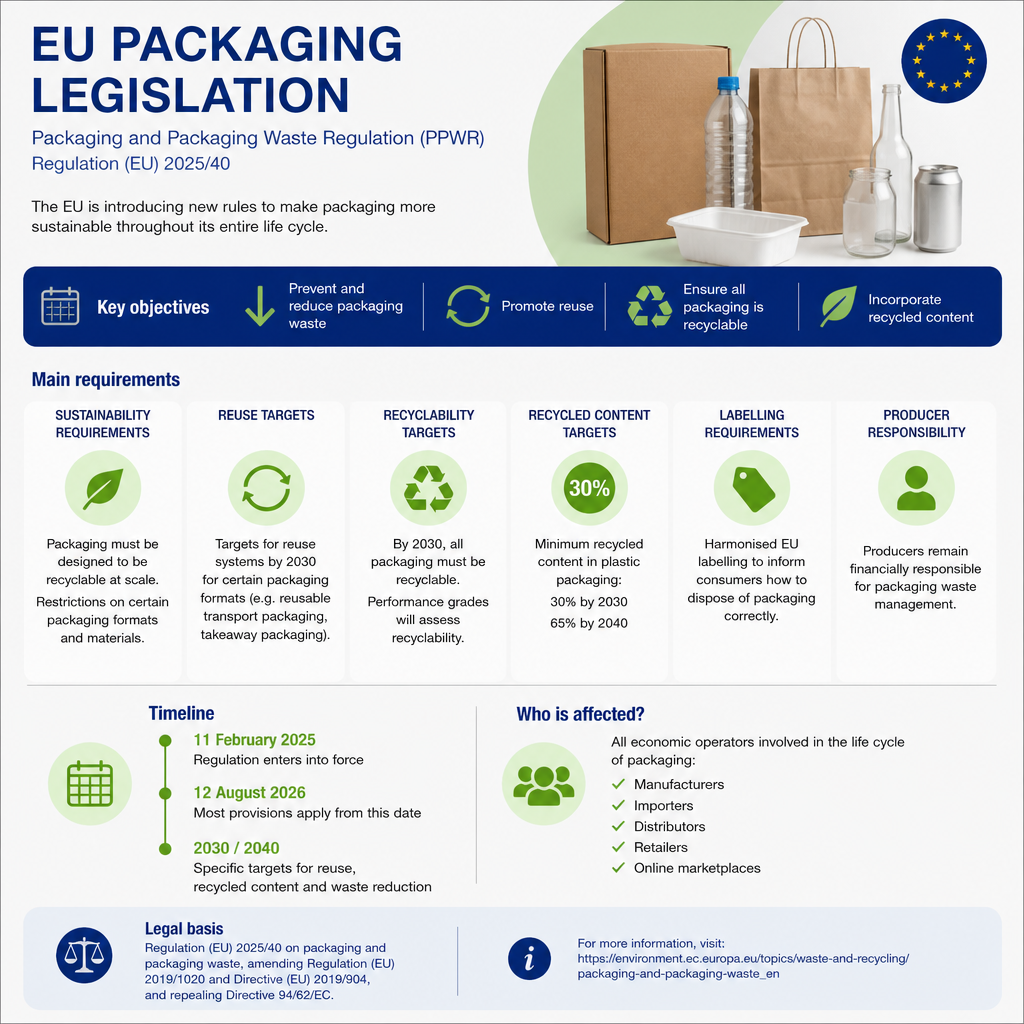
Moreover, the Product Packaging Waste Regulation (PPWR) is perceived by many small business advocates as further exacerbating these challenges. While the intention behind such legislation—to reduce environmental waste through enhanced packaging regulations—may be well-founded, its execution has raised concerns about disproportionate impacts on small and micro enterprises. The argument suggests that such regulations inadvertently favor larger companies like Amazon, which have the logistical and financial means to navigate complex compliance requirements, effectively sidelining smaller competitors who lack such resources.
Compounding this issue is the recent imposition of customs duties on goods shipped from outside the EU, which critics argue aligns more with protecting established market players than fostering a fair competitive environment. By imposing fees on externally sourced goods, the balance of cost versus delivery time is tipped, potentially removing the cost advantage held by imports from countries like China, further complicating the competitive landscape for EU-based small businesses.
A broader issue underlying these debates is the perception of the EU’s legislative approach. The vast bureaucracy required to navigate varied regulations across member states has created an environment where businesses face significant compliance challenges. The apparent lack of a wholly unified legislative approach across the EU further complicates matters, as individual member states often impose their regulations, leading to inconsistencies and implementation hurdles that small businesses find difficult to surmount.
Critics argue that these barriers are partly a result of the EU’s intricate legislative processes, which can often appear opaque and slow. The bureaucratic burden and potential delays can create uncertainties for businesses trying to plan ahead and adapt to new regulations, thus potentially stifling innovation and growth within the small business sector. Conversely, such bureaucracy is also viewed as essential in ensuring coordinated efforts within a diverse bloc like the EU, where consensus must be reached among a wide array of economic, cultural, and political interests.
In this complex landscape, the challenge for policy-makers lies in balancing the need to address environmental concerns, promote innovation, and ensure fair competition in a market as diverse and complex as the EU. Ensuring that regulations are designed and implemented in a manner that does not disproportionately impact smaller players is crucial. Furthermore, fostering an ecosystem where small businesses have the support and resources to comply with regulatory demands is vital for the overall health of the EU market.
The discussion reflects a broader global narrative where regulatory environments can often appear to favor larger, more entrenched businesses, bringing into focus the need for policies that consider the unique challenges faced by smaller enterprises. In an era where economic inclusivity and sustainability are paramount, equipping all market participants to thrive, regardless of size, should remain a priority for legislative bodies worldwide.
Disclaimer: Don’t take anything on this website seriously. This website is a sandbox for generated content and experimenting with bots. Content may contain errors and untruths.
Author Eliza Ng
LastMod 2026-08-25