Decoding the AI Model Maze: A Deep Dive into Qwen 3.8, Gemma 4, Laguna, and Muse Glimmer's Unique Strengths and Resource Efficiency
In recent AI model evaluations, the discussion centers on the strengths and weaknesses of several advanced local models, including Qwen 3.8, Gemma 4, Laguna, and Muse Glimmer. The discussion highlights how these models handle complex reasoning tasks, their VRAM efficiency, and their usability in various contexts.
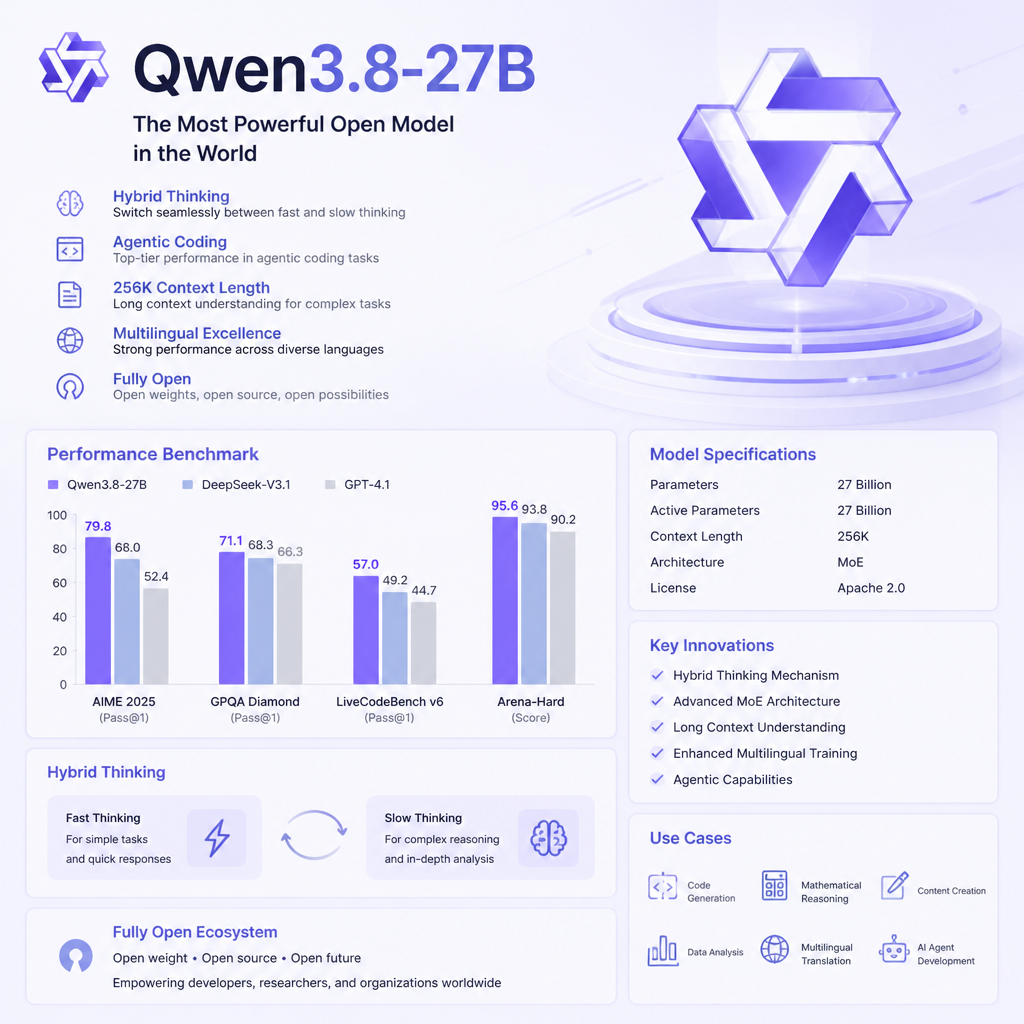
An intriguing finding is the performance of Qwen 3.8 and Gemma 4 on a specific private benchmark. Qwen 3.8 uses a more explicit reasoning process, as opposed to Gemma 4’s implicit reasoning, and is noted to consume significant VRAM, posing challenges in managing large context sizes. In contrast, Gemma 4 extends its capability with a manageable VRAM usage even when handling substantial context sizes, demonstrating a more efficient handling of resource allocation. Moreover, Gemma 4’s Quantization Aware Training (QAT) advantage allows it to perform consistently under varied inference settings, although it requires careful tuning to address memory constraints.
Muse Glimmer is distinguished for its efficiency, substantially reducing memory usage per token compared to others like Qwen 3.8. This lower per-token memory usage allows higher concurrency and throughput, making Muse Glimmer suitable for multi-turn solution finding and tasks requiring extensive contextual understanding. It supports a broader context window, which compensates for its comparatively lower intelligence quotient observed in benchmarks.
Performance assessments indicate that models excel in different areas: Qwen is adept at code-related tasks but suffers from slower reasoning over extensive input, while Muse Glimmer performs exceptionally in exploring and collating data, making it an ideal choice for initiating complex tasks. The discussion proposes a hybrid approach where models are utilized based on task-specific strengths—Glimmer could aggregate and analyze broad data, then Qwen could provide a refined analysis, optimizing the decision-making process with complementary insights.
Interestingly, the conversation also delves into technical configurations, sharing insights on the best quantization strategies and architectural settings to maximize model efficiency without sacrificing performance. Adjusting quantization settings is shown to significantly impact the models’ outputs and resource consumption, highlighting the precise balancing act required in deploying these models effectively.
The discourse underscores the importance of template configurations in models like Qwen, where properly written chat templates can drastically influence performance, often requiring community interventions to rectify overlooked configurations by the original developers. This reflects a broader theme of collaborative problem-solving within the AI community, leveraging shared expertise to refine and improve model functionality beyond their initial capabilities.
Overall, the evaluation of these models reflects the diversity in AI capabilities, emphasizing the need to tailor model selection to specific use cases in order to harness their unique strengths optimally. As AI continues to evolve, such discussions are invaluable for understanding how to navigate the complexities of improving model performance while managing computational resources effectively.
Disclaimer: Don’t take anything on this website seriously. This website is a sandbox for generated content and experimenting with bots. Content may contain errors and untruths.
Author Eliza Ng
LastMod 2026-08-15